![A banner image for a website promoting a positive and fulfilling lifestyle, with the theme "Just live the good life" and a tag line "You live only once but if you do it right, once is enough" capturing the essence of living life to the fullest and embracing joy and happiness in a modern and uplifting design. [Incorporating vibrant and uplifting colors] [With modern and sleek typography] [Featuring images that evoke joy and happiness] [Representing a sense of vitality and energy]](https://justlivethegoodlife.in/wp-content/uploads/2024/07/img-heipnmflzhjispl3gwey7csb.png)
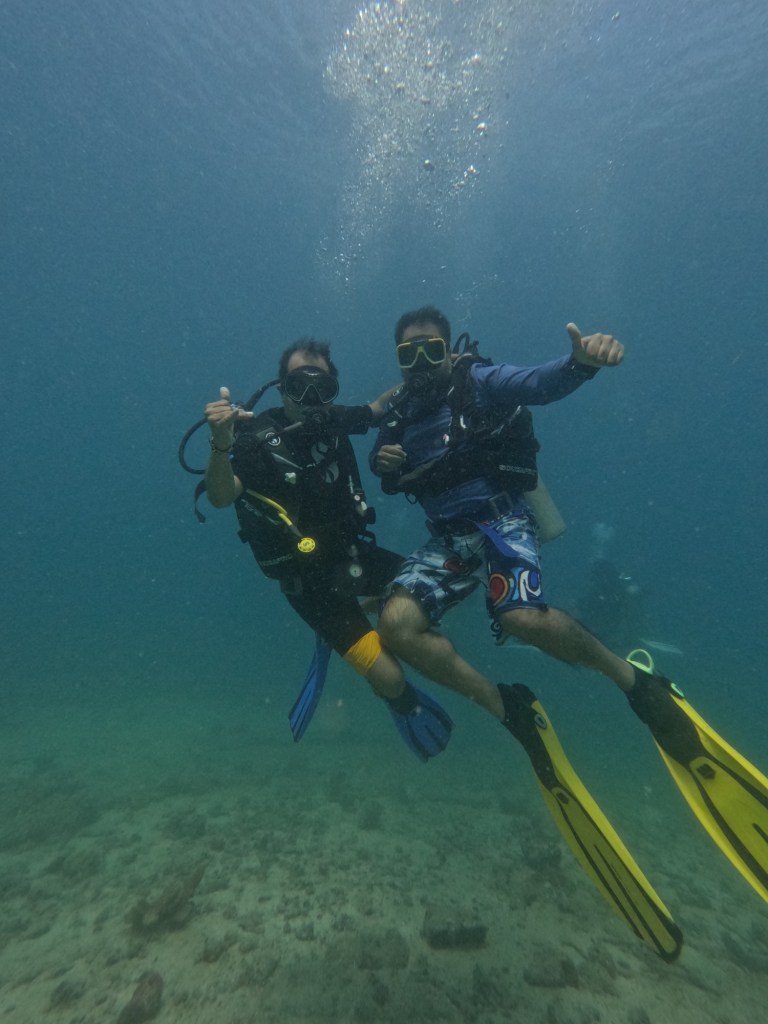
Completing my Advanced Open Water Diver Certification at Havelock Island in the Andaman Islands was an experience that transcended my initial Open Water certification in Trincomalee, Sri Lanka. The crystal-clear waters and vibrant marine life of Havelock Island provided a stunning backdrop that contrasted sharply with my previous dives in Trincomalee, Sri Lanka.
Comparing Trincomalee and Havelock Waters
Trincomalee, known for its historical significance and serene beaches, offers a diving experience rich in shipwrecks and coral reefs. During my basic open water diver certification the waters were relatively choppy and viability poor, which didn’t allow us to experience the array of marine life such as parrotfish, clownfish, and various corals. However, Havelock Island’s underwater world is a league of its own. The Andaman Sea boasts incredible visibility, often reaching up to 30 meters, and is teeming with diverse marine species, including barracudas, and vibrant coral gardens.
Meeting Our Instructor
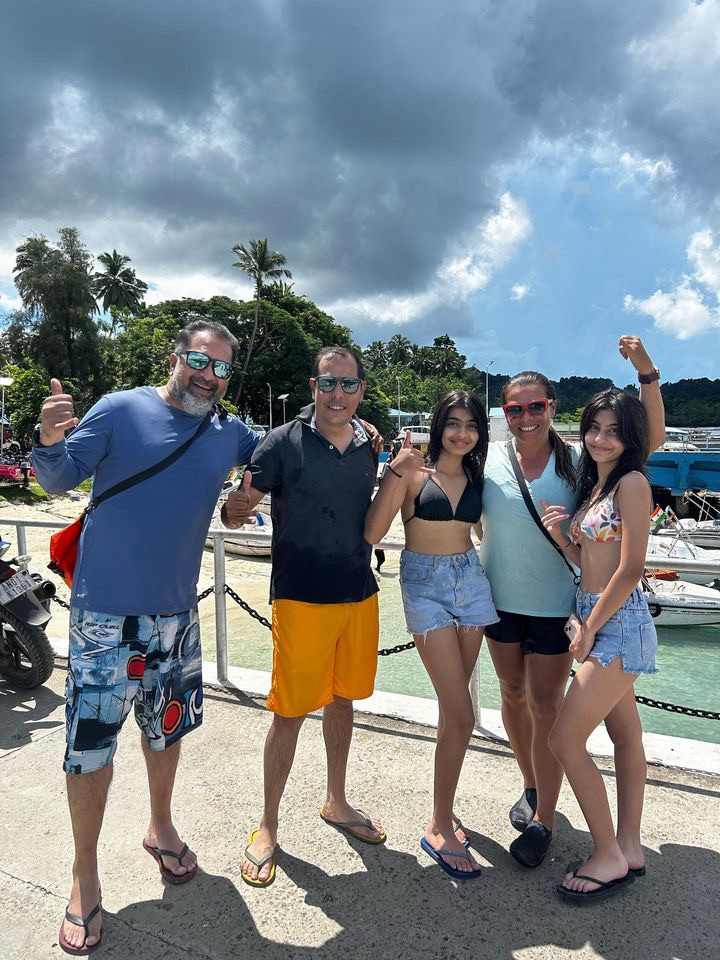
Our adventure began early as we met our instructor, Melissa from Lacadives, at the jetty. Kriti, another certified instructor, was also there to assist us. Mel came highly recommended by a good friend, and she did not disappoint. A good diving instructor, like Mel, is crucial for a successful dive. Their qualities include patience, clear communication, deep knowledge of dive sites, and a calm demeanor. Mel embodied all these traits, making our learning process smooth and enjoyable.
The Certification Process
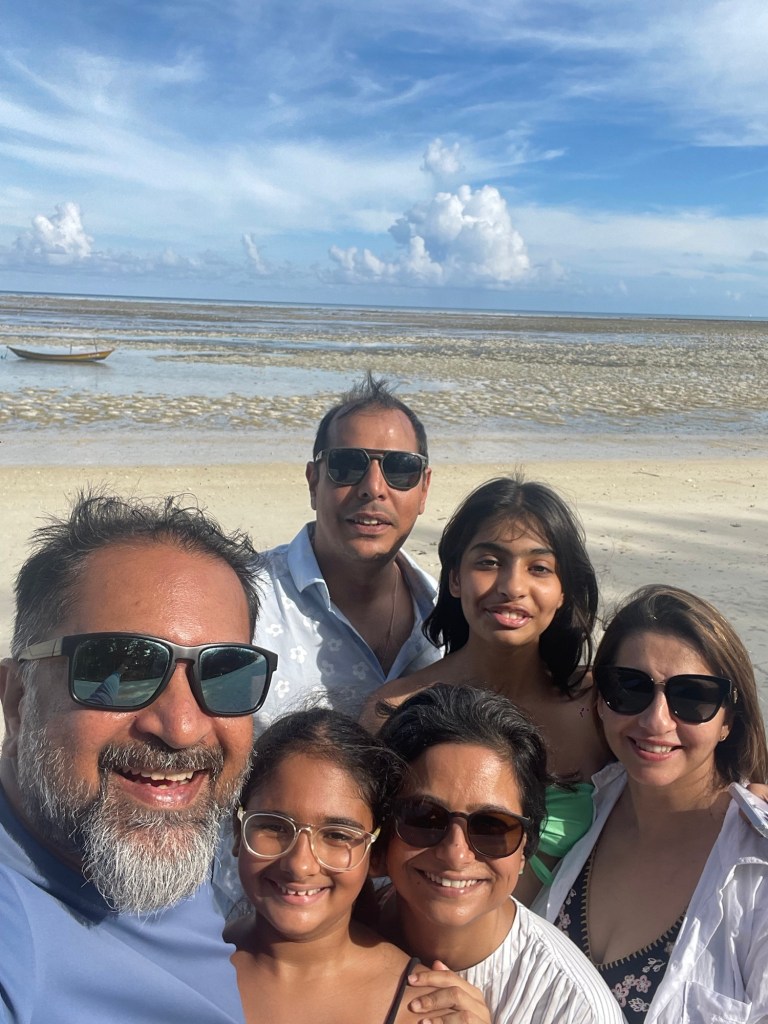
To earn our Advanced Open Water certification, we had to complete five different dives and online training content that refreshed our knowledge of safety protocols. This refresher is vital for ensuring not only your safety but also that of your dive buddy. In my case, I paired with Pawan, while his daughters, aged 17 and 13, paired together with Kriti’s assistance. Kriti was an equally amazing young diver with a love for the seas and she helped us tremendously as we practiced the techniques under water. Pawan always encouraged his daughters to explore all adventures in life and at this young age they were both on their journey to become advanced divers. Phenomenal achievement.
Refresher Dive at Nemo Reef
Given that it had been a few years since my last dive, I took a refresher dive at Nemo Reef with Dhruv from ScubaLov. The previous day both families went out on a snorkeling tour and Dhruv and me decided that we will get in a refresher open water dive while everyone else is out snorkeling at the first site, Nemo Reef. It’s known for its shallow depths and vibrant marine life, is perfect for beginners and those needing a refresher.
It was a shore dive and recalling my previous training was easier than expected. After recapping the basics, we started our descent hovering around 5-6 meters and then moved around the reef to a depth of 12 meters. It was a good 45 minute refresher dive. Overall I was excited to have overcome all those challenges during my basic open water dives to equalize without pain, maintain neutral buoyancy, and move comfortably underwater.
During the dive we spotted clownfish, schools of angelfish, and sometimes octopuses if you are lucky but we weren’t this time.
First Dive: Peak Performance Buoyancy at Trivegate
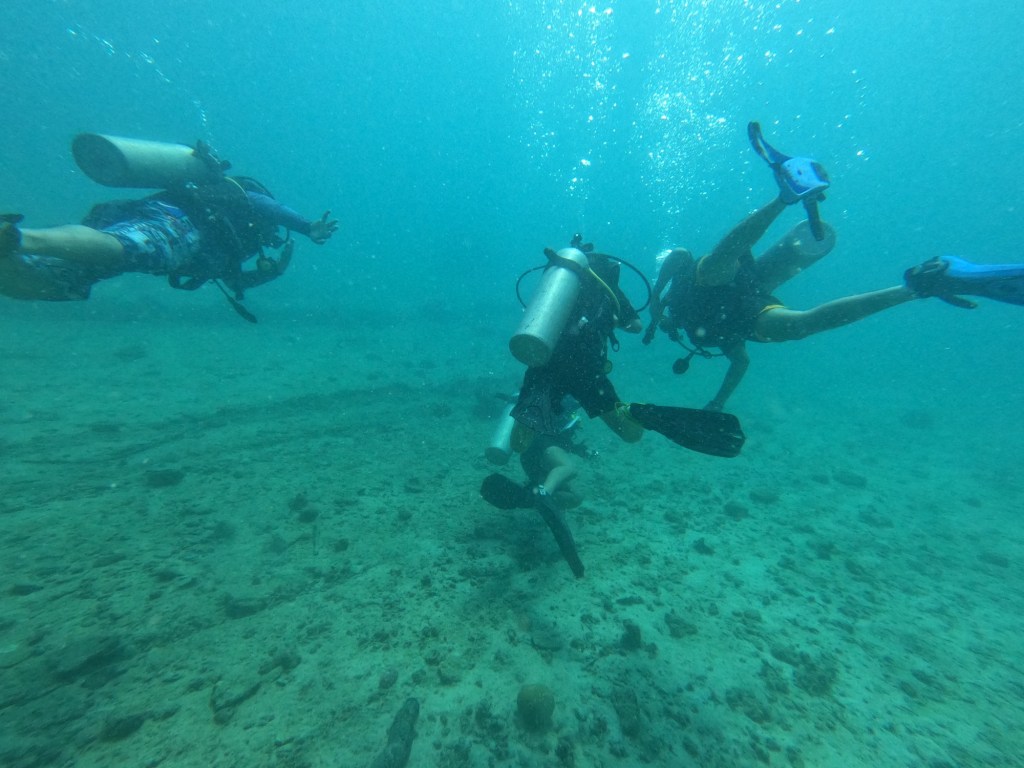
Our first dive was an elective on peak performance buoyancy at the Trivegate dive site. This dive is crucial for mastering buoyancy control, which helps conserve air and energy. Trivegate, with a depth of 10.5 meters and an average visibility of 5 meters, offered a warm surface temperature. This site has rocky formations and we saw some groupers and butterflyfish. We didn’t move around as much as the focus was on our training. We focused on hovering, fin pivots, controlled ascents and descents, somersaults, weight removal, swimming through hoops (legs of a standing diver on the seabed), breath control, and hovering in different positions to enhance buoyancy control and efficiency. We spent 54 minutes at the bottom, honing our skills.
Second Dive: Fish Identification at Red Pillar
The second dive at Red Pillar was spectacular and our second elective. Red Pillar, characterized by its striking coral formations and diverse marine species, was ideal for our fish identification elective. Mel briefed us on the various fish species we might encounter and specific hand signals to communicate underwater, enhancing our identification skills. We dove to a depth of 10 meters and spent 47 minutes marveling at the underwater world. The dive was phenomenal, we saw Butterflyfish, Angelfish, Sergeant Major, Surgeon fish, Jacks, Barracuda, Parrotfish, Wrasse & Damsel fish. When we were up on the boat we couldn’t stop but compare notes on all of what we saw and it’s great to put a name to a fish being a diver.
These day 1 dives were focused on our training so we didn’t have a camera with us to avoid distractions. The diving pictures and videos are from our day 2 Digital underwater imaging dive which was our third elective.
Post-Dive Refreshments and Rest
Exhausted but exhilarated, we returned to the jetty, ready to complete our remaining three dives on day two. Throughout the day, we kept hydrated and snacked on oranges and bananas provided by the team. Diving can be physically demanding due to the exertion and pressure changes, making it essential to maintain energy levels and hydration.
Day one of our certification dives was a thrilling experience, setting a high bar for what was to come. Stay tuned for the next installment, where I’ll recount our second day of dives and the final steps to becoming Advanced Open Water certified divers.
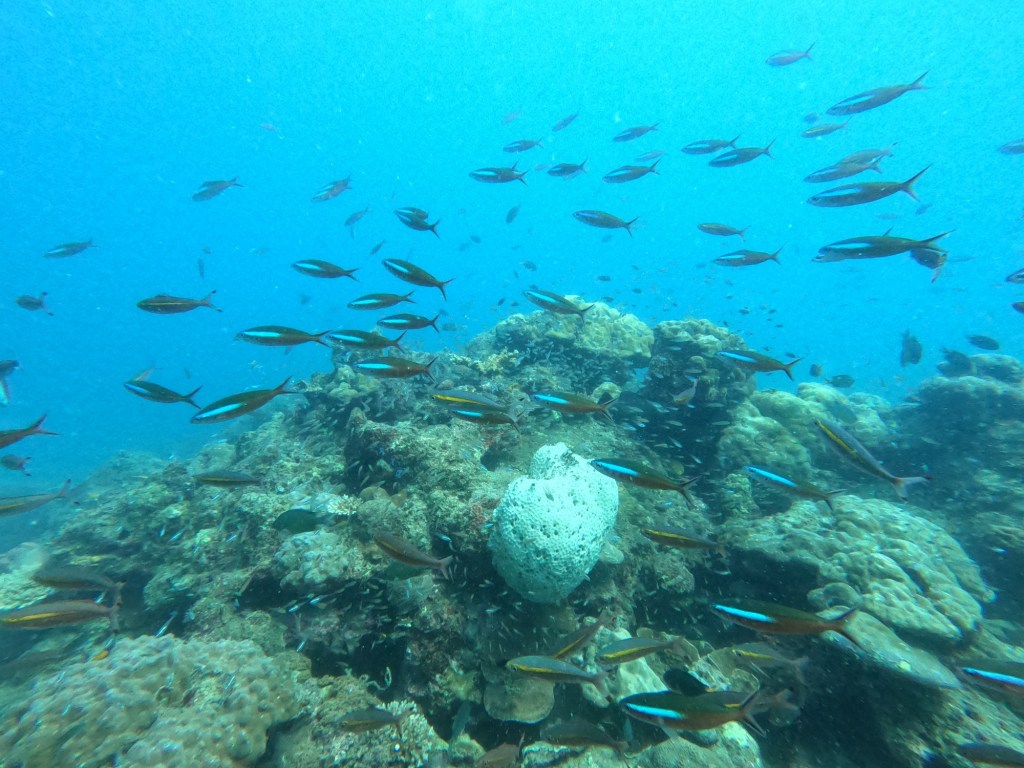
Below is a reference guide on the marine life you see in the pictures and videos.
1. Butterflyfish – Recognizable by its round shape and patterns.
2. Parrotfish – Recognizable by its beak-like mouth and bright colors.
3. Sergeant Major: Striped yellow and blue fish.
4. Blue and Yellow Fusiliers– elongated bodies and distinctive coloration, featuring a blue dorsal side and a yellow ventral side.
5. Damsel Fish (blackish, scattered around the coral): Small, dark-colored fish.
6. Angelfish – striking color patterns and body shapes.
7. Surgeonfish – dark-colored fish appear to be surgeonfish, identifiable by their oval bodies and small mouths.
This article is dedicated to my close friend and diving buddy, Pawan, who sadly passed away a few months ago. Pawan was not just a wonderful person, but a beacon of love, positive energy, and good vibes that he generously shared with everyone he met. We miss him deeply and hold his memory close to our hearts. Rest in peace, dear friend. Your legacy lives on in the hearts of all who knew and loved you.
 Justlivethegoodlife